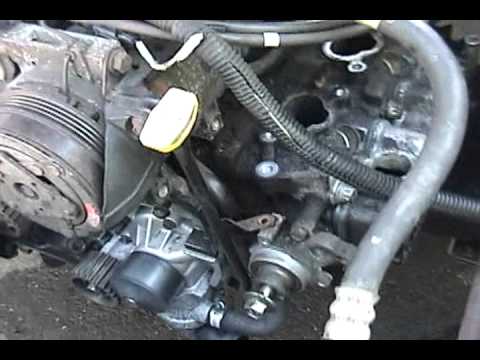
In this series, I show the cylinder head replacement job on my 1995 Subaru Legacy. This isn’t a DIY – it’s too complex. But, it’s a good overview of the proc…
In this series, I show the cylinder head replacement job on my 1995 Subaru Legacy. This isn’t a DIY – it’s too complex. But, it’s a good overview of the proc…
You must be logged in to post a comment.
)
Thanks. I completed the job a long time ago. I removed the camshaft sprocket because I replaced the whole cylinder head.
Thanks for nice tutorials! Just wanted to add some details what I learned myself to people who are going to do the same work:
1.When you loosing exhaust pipes and lifting up the engine pay attention on the oxygen sensor cable on the back left side of the engine. When you don’t loose it you can easily brake it.
I changed both cylinder head gaskets without removing the camshaft sprocket gear and rocket cover. All you need to open is 6 cylinder head bolts.
Good luck!
Indrek
There’s also the stress of figuring out how to secure the engine to the hoist the first time so I don’t damage anything or hurt myself getting the engine out. I have already replaced a Subaru transmission (out the bottom) and my Vanagon’s engine (also, out the bottom), so that doesn’t phase me. But, in this case, I really didn’t need to lift the engine out in the end. BUT, when I eventually get into 2.5L Subaru engines, I will need to remove the engine to work on them.
A HF hoist is on my eventual to-own list.
Not having an engine hoist does put a damper on being able to do this though! Depending on how often you think you may need it (and assuming you have somewhere to store it), it might be worth checking into a harbor freight hoist. They are frequently on sale for right around $100.
I meant to edit my reply and accidentally deleted the whole comment! With as much work as you did, removing the engine isn’t much more. From where you were when you removed the head, you remove the 6 bolts and 2 nuts holding the transmission to the engine and lift the engine out.
Well, the engine already burned oil. There’s been no change since I replaced the cylinder head. I had the scrape the carbon off. It was thick and almost rock-like. I got it off carefully without damaging anything. As for the oil, I’m sure that small amount burned off very quickly. I’m not worried about that.
I don’t disagree, but you’re proposing removing the engine as if that step is no big deal. The actual cylinder head would have been easier, but getting the engine out would have added more difficulty. Plus, I don’t have an engine hoist or a stand to work on. In the future… maybe. It’s a good idea, but removing the engine does complicate the job.
Oh another “for the future” I wouldn’t put oil inside the cylinder or scrape carbon from the piston. If anything, spray some WD-40 on a rag and wipe the cylinder wall with it. If you put oil in there it can coke onto the cylinder walls and cause you to start burning oil. That carbon build up on the piston will be there again once you start running the car again.
In the future….this process is much easier if you remove the engine and do the work on an engine stand. You did all the same work as removing the engine but had less room to do the head gasket job in the car. Plus you’re working sideways instead of being able to stand the engine on its side.
Thanks for the nice videos 🙂
The new ones are working just fine. The harmonic balancer might have been overkill. I saved the old one for an emergency spare. The latest alternator I installed has been behaving perfectly.
whatever happened with the alternator and the harmonic balancer you recently replaced?
Yeah, it’s been running fine for around six months now with no recurrence of the check engine light.
well the engine block doesn’t appear to be cracked so I’d say your car is in pretty good shape now.
I can’t remember exactly what I did, but I was careful. Almost six months later, and it’s running fine.
whatever you did to clean the carbon out of the cylinder very important to make sure you don’t scratch the inside surfaces. It should always shine and typically they have very low tolerance for scratches